

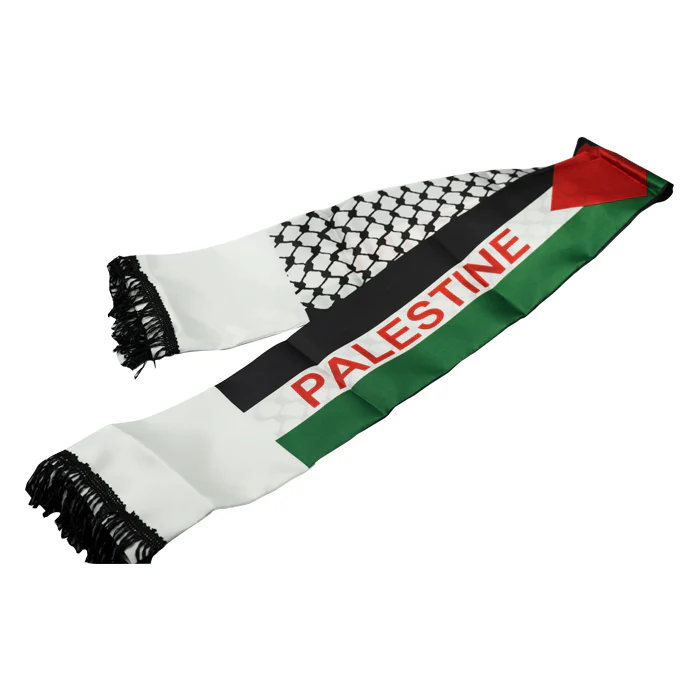
The Palestine scarf, widely known as the keffiyeh, is not merely a piece of fabric but a powerful emblem of Palestinian identity, resistance, and solidarity. This checkered scarf has evolved beyond its traditional roots to become a universal symbol, embraced by people from diverse backgrounds to express their support for the Palestinian cause. In this article, we will explore the history, symbolism, and cultural significance of the Palestine scarf, tracing its origins and understanding its role as a potent symbol in both political and cultural spheres.
History and Origins of the Keffiyeh
The keffiyeh also referred to as the shemagh or ghutra, has ancient origins in the Middle East. Traditionally, it was worn by Bedouins and rural Arab communities to protect against the harsh desert environment. The keffiyeh served practical purposes, such as shielding the face from the sun and dust, and it was often used as a makeshift tool for carrying items.
Traditional Use: The keffiyeh was typically worn as a head covering, folded into a triangle, and secured with a band called an agal. The checkered pattern of the keffiyeh varied from region to region, with different colors and designs representing various tribal affiliations.
Evolution as a Symbol: The keffiyeh began to acquire political significance during the early 20th century, especially during the Arab Revolt of 1936-1939 against British colonial rule in Palestine. During this period, the scarf became a symbol of Palestinian nationalism and resistance, solidifying its association with the Palestinian struggle.
Symbolism of the Palestine Scarf
The Palestine scarf is imbued with profound symbolism, representing various facets of Palestinian identity, struggle, and resistance.
National Identity: For Palestinians, the keffiyeh is a powerful symbol of national identity. It is often worn during protests, rallies, and demonstrations as a statement of solidarity with the Palestinian cause. The scarf has become synonymous with the fight for Palestinian rights and self-determination.
Resistance: The keffiyeh is also a symbol of resistance against oppression and colonialism. Its association with Palestinian fighters and activists has made it a global emblem of resistance movements. The black-and-white checkered pattern, in particular, is most closely associated with the Palestinian struggle.
Solidarity: Beyond the Middle East, the keffiyeh has been adopted by activists and supporters worldwide as a symbol of solidarity with the Palestinian people. It is often worn by those who stand against injustice and support the fight for human rights.
The Keffiyeh in Popular Culture
In recent decades, the keffiyeh has found its way into popular culture, worn by celebrities, fashion designers, and activists. Its rise in popularity has sparked discussions about cultural appropriation and the commercialization of symbols with deep political meanings.
Fashion Statement: The keffiyeh became a global fashion trend in the early 2000s, with high-profile celebrities and fashion houses incorporating the scarf into their designs. While some view this as a celebration of Palestinian culture, others criticize it as an appropriation of a symbol with significant political and cultural weight.
Cultural Appropriation: The commercial use of the keffiyeh, particularly when stripped of its political context, has raised concerns about cultural appropriation. Critics argue that turning the keffiyeh into a mere fashion accessory diminishes its significance as a symbol of resistance and solidarity.
Awareness and Education: On the other hand, the widespread visibility of the keffiyeh in popular culture has also led to increased awareness of the Palestinian cause. For some, wearing the scarf is a way to spark conversations and educate others about the history and struggles associated with it.
Controversies Surrounding the Keffiyeh
The keffiyeh is not without its controversies, particularly regarding its use outside its original cultural and political context.
Political Statements: The keffiyeh has been a point of contention in political debates, especially in Western countries where it is sometimes viewed as a symbol of radicalism or extremism. This misunderstanding can lead to tensions and conflicts over its display in public spaces.
Commercialization: The mass production and commercialization of the keffiyeh by Western companies have sparked outrage among those who view it as a form of cultural exploitation. The production of cheap, mass-produced versions of the scarf often overlooks its cultural significance and the struggles it represents.
Appropriation vs. Solidarity: The line between cultural appropriation and genuine solidarity can be blurry. While some individuals wear the keffiyeh to show support for the Palestinian cause, others may do so without understanding its historical and political significance, leading to accusations of appropriation.
How to Wear and Use the Keffiyeh
While the keffiyeh is traditionally worn as a headscarf, there are various ways to incorporate it into your wardrobe or daily life, whether as a fashion statement or a show of solidarity.
As a Headscarf: The traditional way to wear the keffiyeh is to fold it into a triangle, drape it over the head, and secure it with an agal or by tying the ends behind the neck. This style remains popular in the Middle East and among activists.
As a Neck Scarf: The keffiyeh can also be worn around the neck, similar to a bandana. This style is more common in Western fashion and allows for versatility in how it is worn.
As a Shawl or Wrap: In colder climates, the keffiyeh can be used as a shawl or wrap, providing warmth while making a political statement. This is a practical and stylish way to wear the scarf.
In Protests and Rallies: The keffiyeh is often worn during protests as a symbol of resistance and solidarity. It can be draped over the shoulders, worn as a bandana, or even carried as a flag.
Conclusion
The Palestine scarf, or keffiyeh, is a potent symbol of resistance, identity, and solidarity. Its journey from a practical piece of attire to a global symbol of the Palestinian struggle is a testament to its cultural significance. Whether worn as a statement of support or as a fashion accessory, the keffiyeh carries with it a rich history and deep meaning. As it continues to be a symbol of resistance and solidarity, it is essential to understand and respect the cultural and political weight it bears.
FAQs:-
Q1: What is the significance of the Palestine scarf?
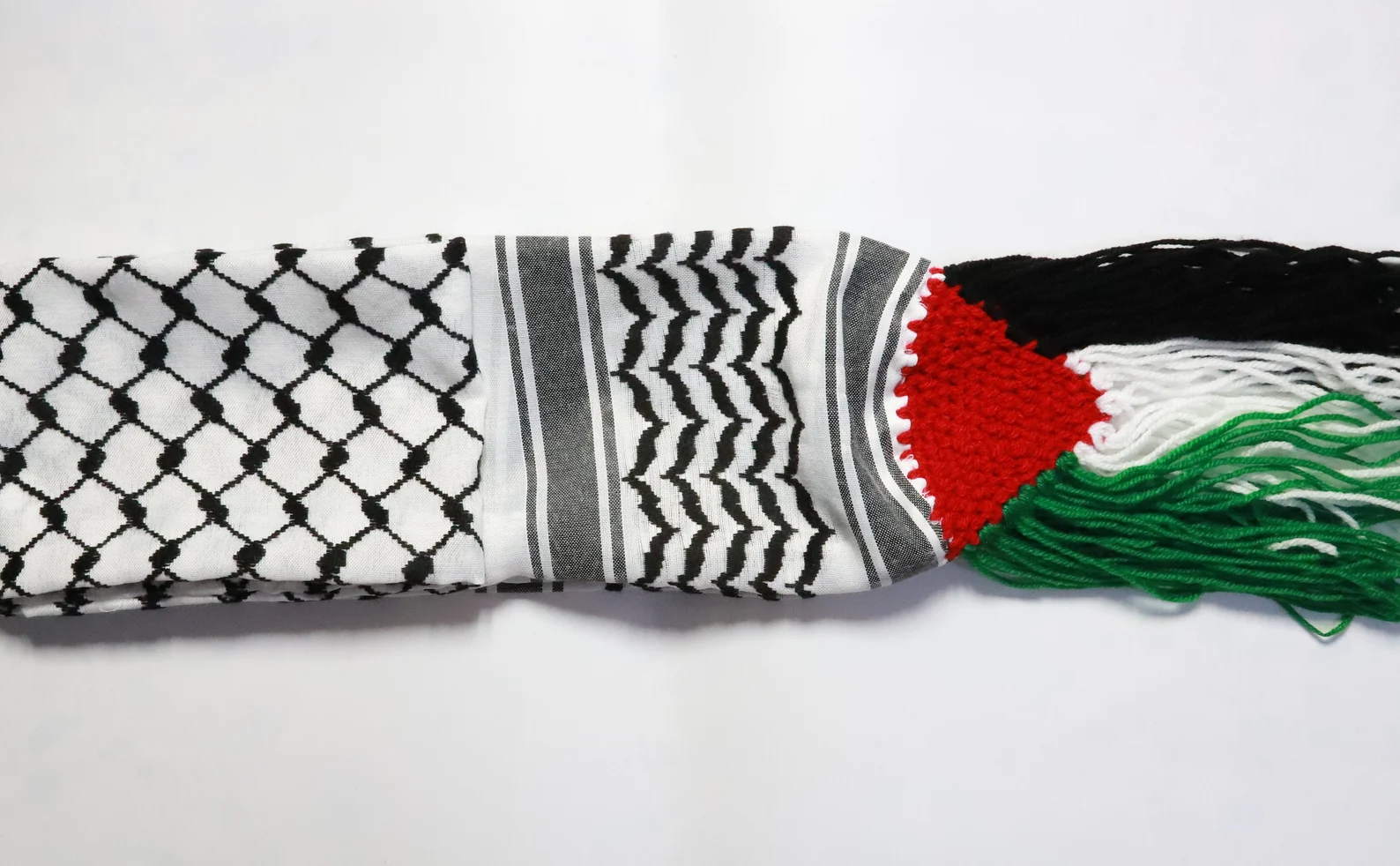
A1: The Palestine scarf, also known as the keffiyeh or shemagh, is a traditional Arab headdress that has become a symbol of Palestinian identity and solidarity. It is often worn to show support for Palestinian causes and is recognized worldwide as a representation of resistance and unity. The black-and-white checkered pattern, most commonly associated with the keffiyeh, was popularized by Palestinian leader Yasser Arafat and has become a cultural and political symbol.
Q2: How should the Palestine scarf be worn?
A2: The Palestine scarf can be worn in several ways, depending on personal preference and cultural practice:
Head Covering: Fold the scarf into a triangle, place it over the head with a long edge across the forehead, and secure the ends around the head or neck.
Neck Scarf: Fold the scarf into a triangle and drape it around the neck, either loosely or tightly wrapped, with the ends hanging in front.
Face Covering: For protection from dust or sand, the scarf can be wrapped around the lower part of the face, covering the nose and mouth.
Fashion Accessory: The keffiyeh is often worn as a stylish accessory, draped loosely around the neck or shoulders, without specific cultural or political intent.
Q3: Where can I buy an authentic Palestine scarf?
A3: Authentic Palestine scarves can be purchased from a variety of sources:
Online Retailers: Websites like Amazon, Etsy, and specialized stores offer a wide range of keffiyehs, often with detailed descriptions of their origin.
Palestinian Craft Shops: Supporting Palestinian artisans by purchasing directly from shops or online stores based in Palestine ensures authenticity and helps the local economy.
Cultural Markets: Many cultural or international markets sell authentic keffiyehs, often handmade and imported directly from the Middle East.
Activist Groups: Some activist groups and organizations sell keffiyehs as part of their fundraising efforts, with proceeds supporting Palestinian causes.
Q4: What are the different colors of the Palestine scarf, and what do they represent?
A4: The most common color of the Palestine scarf is black and white, which is closely associated with Palestinian nationalism. However, other colors are also popular:
Black and White: Represents Palestinian resistance and is the most traditional and widely recognized pattern.
Red and White: Often associated with various Arab nationalities, including Jordanian and Bedouin heritage, though it is also worn by some Palestinians.
Green, Blue, and Other Colors: These variations are often worn for fashion purposes or to show personal style, without specific political or cultural meaning.
The colors can vary in meaning based on regional or personal interpretations, but the black-and-white keffiyeh remains the most iconic symbol of Palestinian identity.
To read more, Click Here
