
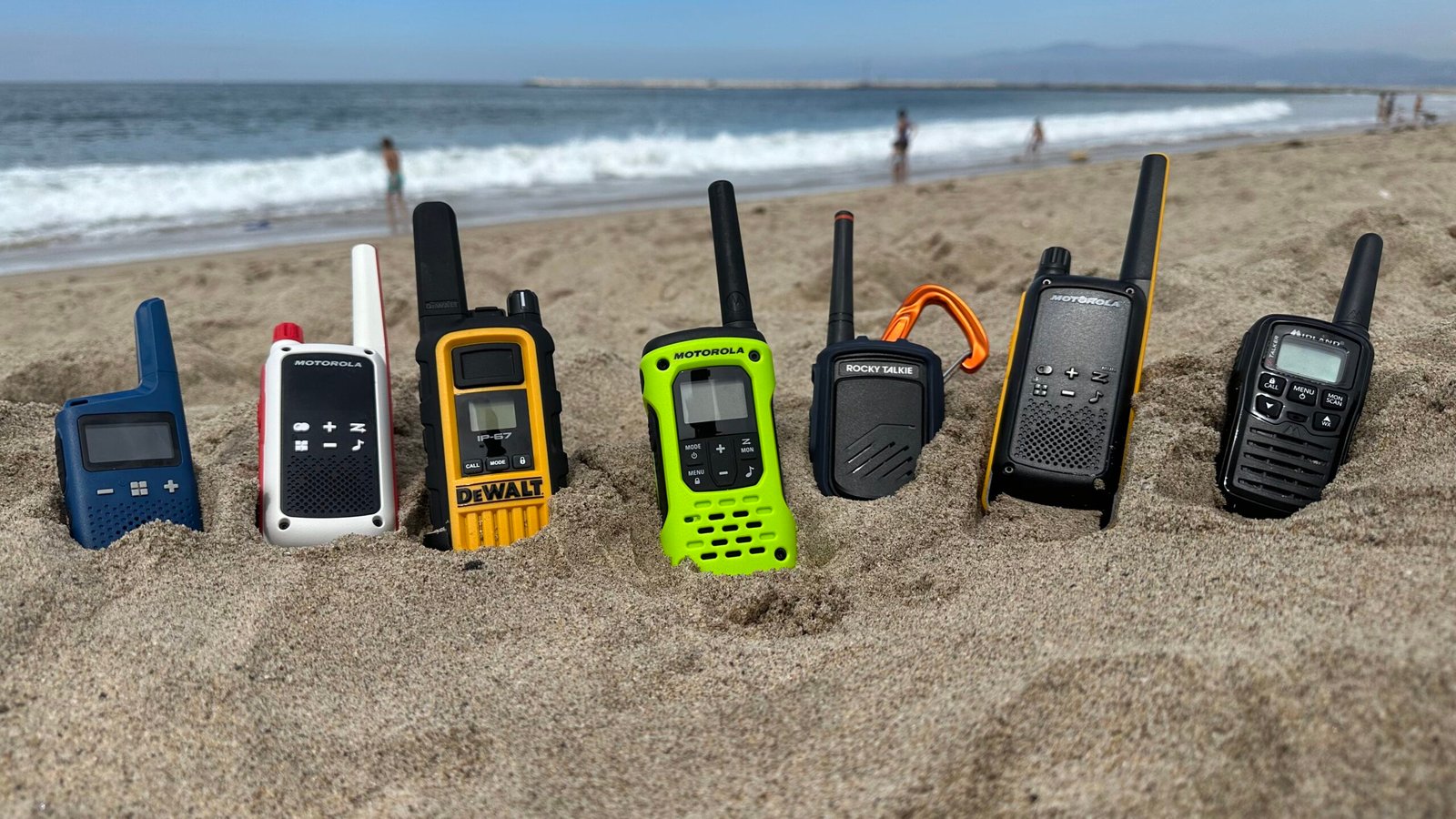
Walkie-talkies have remained an essential communication tool for a wide range of industries and activities, where immediate and reliable contact is necessary. From outdoor explorers to construction crews, and emergency responders to event staff, walkie-talkies provide a practical, affordable, and dependable means of staying connected without relying on cellular networks. As technology advances, walkie-talkies have evolved to become more powerful and versatile. In this detailed guide, we’ll explore everything you need to know about walkie-talkies, including their types, features, and how to select the best one for your specific needs.

What Is a Walkie Talkie?
A walkie-talkie, or handheld transceiver, is a portable two-way radio device used for voice communication over radio frequencies. These radios allow people to talk and listen to one another instantly, without requiring cellular service or an internet connection. Walkie-talkies are widely used for outdoor activities such as hiking, camping, and skiing, as well as for professional purposes on construction sites, security operations, and event management.
Unlike smartphones that rely on cellular networks, walkie-talkies transmit radio waves, making them particularly useful in areas with limited or no cellular reception.
How Do Walkie Talkies Work?
Walkie-talkies transmit radio signals across a specific frequency range, typically between 100 MHz and 900 MHz. Depending on the model, they may use analog or digital technology. Most consumer walkie-talkies still rely on analog signals, which are simpler and cheaper to produce.
The main components of a walkie-talkie include:
Transmitter: Sends out the audio signal, allowing your voice to be transmitted across radio waves.
Receiver: Picks up signals from other walkie-talkies on the same frequency.
Antenna: Helps transmit and receive radio signals. The size and quality of the antenna can affect the device’s range.
Battery: Typically rechargeable, though some models still use disposable batteries.
Speaker and Microphone: Enables you to listen to messages and speak into the device. Walkie-talkies use radio frequencies to transmit and receive signals in real time, so users on the same channel can communicate instantly.
Types of Walkie Talkies
There are several types of walkie-talkies available, each designed for different uses. Here are the most common types:
Analog Walkie Talkies
Analog walkie-talkies are the most basic and traditional models. They are widely used by outdoor enthusiasts, hobbyists, and workers in construction or security fields. These radios operate using analog signals, providing reliable voice transmission with a focus on simplicity and ease of use. While they don’t offer some of the advanced features of digital models, they are cost-effective and sufficient for short-range communication.
Digital Walkie Talkies (DMR)
Digital Mobile Radios (DMR) are a newer generation of walkie-talkies that offer enhanced sound quality, longer ranges, and improved performance in noisy environments. DMR radios convert voice signals into digital data, resulting in clearer audio. They often come with additional features, such as text messaging, GPS tracking, and even encryption for added privacy.
GMRS and FRS Radios
Two common types of walkie-talkies in the U.S. are GMRS (General Mobile Radio Service) and FRS (Family Radio Service) radios. These radios operate on different frequency bands and have distinct characteristics.
GMRS Radios: GMRS radios have a higher power output (up to 50 watts), which means they can communicate over longer distances (up to 25 miles or more). They require an FCC license to operate and can support repeaters for extended range.
FRS Radios: FRS radios are simpler, more affordable, and require no license. They have lower power output (up to 2 watts) and are best for short-range communication (typically within a few miles).
Professional Two-Way Radios
These radios are built for demanding work environments such as construction, security, and public safety. They are designed for durability and long-term use, with features like noise cancellation, waterproofing, and enhanced battery life. Professional models also often include advanced functionalities like emergency alerts, push-to-talk (PTT) buttons, and customizable channels.
Bluetooth Walkie Talkies
Bluetooth-enabled walkie-talkies offer the same functionality as traditional models but with the added convenience of wireless connectivity. These devices can pair with Bluetooth accessories, such as headsets or earpieces, to provide hands-free communication. They are commonly used by motorcyclists, cyclists, and athletes.
Key Features to Consider
When selecting a walkie-talkie, several important features can influence performance, range, and usability. Below are the key factors to consider:
Range
The range of a walkie-talkie determines how far the device can communicate with others. The range can be influenced by power output, antenna size, terrain, and environmental obstacles. Consumer models generally offer ranges from 1 to 5 miles, while professional models can cover 20 miles or more. Remember that the range can be reduced in urban areas with tall buildings or dense forests.
Battery Life
Battery life is a critical factor, especially for users who spend long hours outdoors or on the job. Most walkie-talkies have rechargeable batteries, with an average life span of 8 to 12 hours. Some models also include power-saving features or are compatible with external charging sources, such as car chargers or solar panels.
Water Resistance and Durability
For rugged environments, it’s essential to choose a walkie-talkie with a high level of durability. Many models are built to withstand extreme conditions, such as water exposure (IP67 rating or higher) and physical impacts. Waterproof, shock-resistant models are ideal for outdoor activities and demanding work sites.
Privacy and Security
Since walkie-talkies operate on public frequencies, there is a possibility of interference from other users. Some models feature privacy codes (such as CTCSS or DCS) that minimize the risk of unwanted interference. However, these codes don’t encrypt your messages, they merely reduce the chances of overlap with others on the same channel.
Channels and Frequency Bands
Walkie-talkies generally come with multiple channels, allowing you to switch between frequencies to improve signal clarity. The number of channels can range from a few to over 20, depending on the model. Some radios are compatible with both GMRS and FRS bands, while others may also support UHF or VHF bands for greater communication flexibility.
How to Choose the Right Walkie-Talkie
Choosing the right walkie-talkie depends on your specific needs and environment. Consider the following factors:
Intended Use: For outdoor adventures like hiking or camping, look for a lightweight, compact model with long battery life and good range. If you’re working in construction or security, durability, ruggedness, and advanced features like noise reduction should be a priority.
Range Requirements: If you need to communicate over long distances, choose a model with higher power output and a longer range, such as GMRS radios.
Budget: Walkie-talkies range in price from under $20 for basic models to several hundred dollars for professional-grade radios. Set a budget and choose a model that provides the best value for your needs.
Leading Walkie-Talkie Brands
Some trusted brands in the walkie-talkie market include:
Motorola Solutions: Renowned for their reliable, high-performance radios, Motorola caters to both consumer and professional users.
Baofeng: Known for offering affordable, feature-packed radios, Baofeng is a popular choice among hobbyists and outdoor enthusiasts.
Cobra: Cobra produces a wide variety of easy-to-use walkie-talkies for casual users and adventurers.
Midland: Midland’s radios are great for families, outdoor enthusiasts, and emergency preparedness.
Kenwood: Well-known for professional-grade communication devices, Kenwood radios are favored in industries like public safety, security, and construction.
To Conclude
Walkie-talkies continue to be an essential tool for communication, whether you’re exploring the outdoors, managing a construction project, or coordinating event security. With a wide range of models, features, and price points available, choosing the right walkie-talkie depends on your specific needs and environment. By understanding the different types of walkie-talkies and the factors that influence performance, you can make an informed decision and ensure seamless communication in any situation.
FAQs:-
What is a walkie talkie?
A walkie-talkie is a portable, handheld two-way radio transceiver used for communication over short to medium distances. They operate on radio frequencies, allowing users to send and receive voice messages.
How do walkie talkies work?
Walkie-talkies work by transmitting your voice over radio waves. When you press the “push-to-talk” (PTT) button, your voice is converted into a radio signal, which is sent to a corresponding receiver (another walkie-talkie). The receiver then converts the signal back into sound, so the other person can hear your message.
What is the range of a walkie-talkie?
The range of a walkie-talkie varies depending on factors such as the model, power output, terrain, and environmental conditions. Typical ranges are between 1 and 50 miles, but in urban areas with tall buildings or dense trees, the range might be significantly reduced. Some advanced models can reach up to 100 miles in open, unobstructed areas.
To read more, Click Here
