
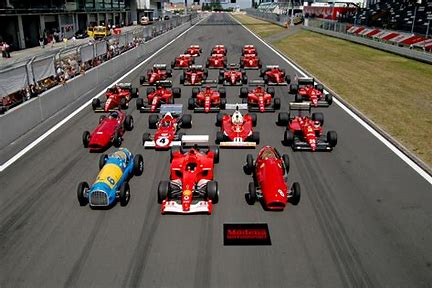
The Formula 1 grid is a captivating component of the game, figuring out the beginning order for every race. While it is able to appear random to the informal observer, there may be a complicated machine in the area to ensure equity and pleasure.
In this article, we are able to delve into the intricacies of the F1 grid, exploring how positions are decided, the techniques hired through groups, and the effect it has on the final results of a race.
Qualifying: The Race to the Front
The beginning positions at the F1 grid are decided via a chain of qualifying classes held earlier than every race. These classes contain every driving force finishing a chain of timed laps across the circuit, with the quickest driving force claiming the pole function. The ultimate drivers are then organized at the grid in descending order primarily based totally on their qualifying times.
Qualifying is a high-strain surroundings wherein each 10th of a 2d counts. Teams rent diverse techniques to maximise their drivers’ overall performance. These techniques include:
Tire selection: Choosing the proper tires for qualifying is essential. Teams have to bear in mind the music conditions, temperature, and the quantity of laps they want to finish.
Fuel load: The quantity of gas carried at some point of qualifying can have an effect on a vehicle’s weight and overall performance. Teams have to stabilise the want for gas to finish the qualifying laps with the choice to be as mild as possible.
Aerodynamic setup: The aerodynamic configuration of a vehicle can extensively affect its pace and handling. Teams will make modifications to their setup primarily based totally at the traits of the circuit and the climate conditions.
The Importance of Starting Position
The beginning function at the F1 grid could have a vast effect on the final results of a race. Drivers who begin from the front have a higher hazard of maintaining the race and controlling the pace.
However, it isn’t always assured of success. Factors inclusive of the music layout, the quantity of overtaking possibilities, and the overall performance of the motors can all have an impact on the result.
In current years, we’ve got numerous examples of drivers who’ve commenced from decreasing positions at the grid and long past directly to win races. This is regularly completed via an aggregate of skillful driving, strategic pit stops, and favorable circumstances.
The Impact of Safety Cars and Virtual Safety Cars
Safety motors and digital protection motors could have a dramatic impact at the F1 grid. When a protection vehicle is deployed, all motors are required to bunch up at the back of it, neutralizing the race.
This can create possibilities for drivers who have been formerly at the back of to trap as much as the leaders. Virtual protection motors are an extra current addition to F1 and permit drivers to sluggish down without the want for a bodily protection vehicle. While they do now no longer neutralize the race withinside the identical way, they are able to nevertheless disrupt the strolling order.
The Role of Pit Stops
Pit stops are an essential component of F1 racing and might extensively affect a driving force’s function at the grid. Teams have to cautiously plan their pit stops to keep away from consequences and make sure that their drivers can hold an aggressive pace. Factors inclusive of:
Tire changes: Teams have to determine while to extrade tires to optimize overall performance and keep away from consequences.
Fueling: Teams have to calculate the quantity of gas wished to finish the race at the same time as minimizing pit stops.
Mechanical maintenance: If a vehicle suffers harm at some point of the race, groups may also want to make maintenance at some point of pit stops.
Well-accomplished pit stops can supply a driving force a vast benefit over their rivals.
The Influence of Safety Cars and Virtual Safety Cars
Safety motors and digital protection motors could have a dramatic impact at the F1 grid. When a protection vehicle is deployed, all motors are required to bunch up at the back of it, neutralizing the race.
This can create possibilities for drivers who have been formerly at the back of to trap as much as the leaders. Virtual protection motors are an extra current addition to F1 and permit drivers to sluggish down without the want for a bodily protection vehicle.
The Role of Strategy
In addition to qualifying and the beginning function, the method performs an important position in figuring out the final results of an F1 race. Teams have to cautiously bear in mind elements inclusive of tire wear, gas consumption, pit stops, and the general race pace. A well-accomplished method can supply a driving force a vast benefit over their rivals.
Conclusion
The F1 grid is a captivating component of the game that provides the pleasure and unpredictability of every race. While the beginning function may be important, it isn’t always the best element that determines the final results. Qualifying, method, and the ever-converting dynamics of the race all play an essential position in figuring out who will stand at the podium.
FAQs
How do groups determine when to pit for tires?
Teams cautiously examine elements inclusive of tire wear, music conditions, gas consumption, and the ultimate quantity of laps to decide while to pit for tires. The purpose is to optimize tire overall performance and keep away from consequences.
What is an “overcut” method?
An overcut method entails a driving force pitting one lap later than the motors in advance of them. This can permit the motive force to byskip the motors on sparkling tires, gaining a function. However, it’s miles unstable because the driving force have to be cautious now no longer to get caught at the back of slower motors.
What is an “undercut” method?
An undercut method entails a driving force pitting one lap in advance than the motors in advance of them. This can permit the motive force to rejoin the music in advance of these motors, gaining a function.
To read more, click here
